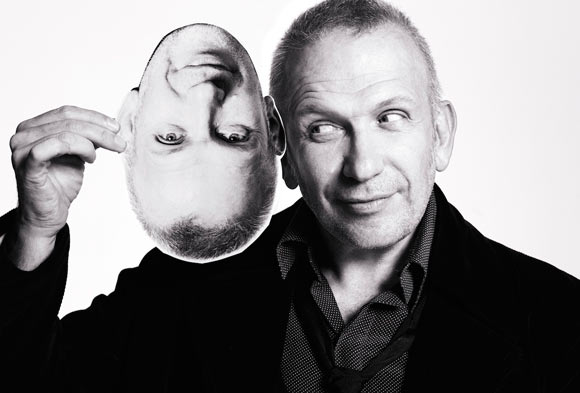
A French prêt-a-porter and haute couture designer, Jean Paul Gaultier was born in Arcueil on 24th April 1952. He never formally got educated or trained as a designer; instead Gaultier sent his sketches to popular couture designers from an early age. In 1970, after being impressed by his drawings, Pierre Cardin hired Gaultier as an assistant. A year later, he took a break in order to work with Jacques Esterel before returning to administer Pierre Cardin fashion house for a year in Manila.
In 1976, he released his first collection and since then he has been recognized as the enfant terrible of the fashion industry in France. His designs have been developed using diverse approaches based on popular culture, street war or have reflected playfulness and bizarreness. Most people at the time found his creativity as decadent, but individuals like Melka Tréanton from Elle, Catherine Lardeur and Claude Brouet from Marie Claire were impressed and seduced by his designs and helped Gaultier launch his career.
By the end of 1980s, he suffered from personal losses. His business partner and lover Francis Menugue died of some causes related to AIDS. Although this was heart wrenching for Gaultier, he made himself busy with his business. In the 1990s, he created some extraordinary sculptured outfits for Madonna for her Confessions Tour and Blond Ambition Tour. Other musical artists for whom he has designed outfits, include Mylène Farmer, Marilyn Manson, Kylie Minogue, and Leslie Cheung
In addition to this, he designed wardrobes of many films, including The Fifth Element by Luc Bresson; Kika by Pedro Almodóvar; The Cook, The Thief, His Wife and Her Lover by Peter Greenaway; and The City of Lost Children by Jean Pierre Jeunet.
His choice of models is shockingly eccentric for the fashion industry, since he uses old men, fat women, tattooed and pierced models in his shows. Because of this, he faced criticism and popularity simultaneously.
Apart from fashion designing, Jean Paul Gaultier associated himself with the music industry as well by releasing dance singles and a music album that included mixes by George Shilling, Norman Cook, Mark Saunders, Tim Atkins, David Dorrell, Latin Rascals and so on.
Moreover, he is known for sponsoring an exhibition entitled Brave heart: Men in Skirts, at the Metropolitan Museum of Art. It was a retrospective of works by Rudi Gernreich, Vivienne Westwood and Dries van Noten. Gaultier designed a collection of skirts for men in 1985. He also collaborated with Montreal Museum of Fine Arts in 2011 to organize a show called The Fashion World of Jean Paul Gaultier: From the Sidewalk to the Catwalk.
In 2012, Gaultier was included in the jury panel at the Cannes Film Festival. This was the first time that a person belonging to the fashion industry was made a part of the jury. The same year he participated in Cali in the Expo-Show, flaunting his collection of fragrances and classic outfits. In the same year , he was appointed as the creative director of Diet Coke and his job involved tasks like pitching in creative ideas for the commercial campaigns of the company, as well as for the online projects and retail events. Following the footsteps of Roberto Cavalli, Gianfranco Ferre, Matthew Williamson and Karl Lagerfeld, he designed limited edition bottles as well.
Jean Paul Gaultier collaborated with Puig to create a perfume line. They created fragrances like Le Mâle, Classique, Fragile, Ma Dame, Kokorico and some more.
In 2014, Gaultier made a significant shift in his career by announcing the discontinuation of his ready-to-wear lines. He decided to focus exclusively on haute couture and his highly successful fragrance empire, which remains a cornerstone of his brand’s global influence. This period of transition culminated in January 2020, when Gaultier celebrated his 50th anniversary in the fashion industry with a monumental final show at the Théâtre du Châtelet in Paris. The star-studded event featured over 200 looks and served as his official retirement from the runway, marking the end of an era for the “Enfant Terrible” of French fashion.
Despite his personal retirement, the house of Jean Paul Gaultier continues to thrive through an innovative “guest designer” concept. Instead of appointing a permanent creative director, the house invites a different world-class designer each season to reinterpret Gaultier’s iconic codes. Renowned names such as Chitose Abe of Sacai, Glenn Martens, Olivier Rousteing, and Simone Rocha have all brought their unique visions to the brand’s haute couture collections. This strategy has allowed the Gaultier legacy to remain at the cutting edge of contemporary fashion, proving that his rebellious spirit and avant-garde aesthetic are as relevant today as they were at the start of his career.